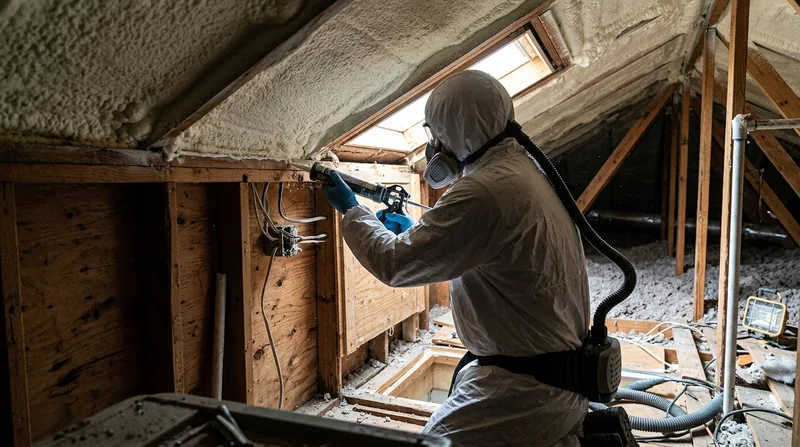




Air sealing in Lakeland is the foundation of any spray foam insulation job, and it matters more here than in drier climates. Lakeland sits in IECC climate zone 2A, where humid air pushes inward through every gap in your attic, walls and crawl spaces for most of the year. That moisture finds its way into cavities, around ductwork, past top plates and through rim joists, driving cooling costs up and creating the conditions for condensation and mold. Before we spray foam, we seal those gaps and penetrations. It stops drafts, cuts moisture intrusion, and lets the foam do its job without fighting against air leakage. We've been sealing and insulating homes across Polk, Hillsborough, Pasco and Orange counties since 2009, and we understand the specific failure modes that plague Lakeland's mid-century block homes, newer subdivisions and metal buildings.
Why Air Sealing Matters in Lakeland's Climate
Lakeland's long hot humid summers put constant pressure on your attic and walls. Vented attics pull in damp outside air, and that moisture-laden air condenses on cool surfaces inside, especially around poorly sealed penetrations and top plates. Block walls in homes built in the 1950s and 1960s lose their original insulation over time, and any gaps in the block cavities become highways for humid air. Rooms over garages in newer subdivisions along the I-4 corridor run especially hot because the attic above them is either uninsulated or poorly sealed. Air sealing closes those paths before foam goes in, so the insulation works at full efficiency and moisture stays where it belongs, outside.
- We seal top plates and band joists to stop air from rising into attics and walls from unconditioned spaces below.
- We block penetrations around ductwork, electrical runs and plumbing before they become moisture entry points.
- We seal rim joists and the edges of crawl spaces to cut drafts and humidity that feed into living spaces.
- We address gaps around HVAC returns and supply boots so conditioned air stays in the ducts instead of leaking into hot attics.
- We seal attic access hatches and pull-down stairs, which are often the single biggest leak in an attic.
Done right, air sealing cuts the moisture load your air conditioning has to handle and extends the life of your insulation and framing.
Key info: Lakeland's humidity never really lets up, so moisture drives inward most of the year. A poorly sealed attic in a home near Lake Hollingsworth or Dixieland will pull in humid air even on cool mornings, and that air condenses on the underside of the roof deck and around ductwork. Air sealing stops that cycle before it starts.
For more on how insulation works in Lakeland's climate, see our guide to attic spray foam insulation.
How We Air Seal Your Lakeland Home
Air sealing is not a single product or technique. It is a process that starts with a walk-through of your attic, crawl space or walls to find where air is moving. We look for gaps between the top plate and the block or framing, cracks in the rim joist band, holes around ductwork and electrical penetrations, and seams where the rim joist meets the slab. Then we seal those gaps with caulk, foam sealant or blocking before we spray the insulation. This order matters. Sealing first keeps the foam where it belongs and prevents it from filling gaps that should be sealed with a cheaper material first.
- We inspect the space and document all air leaks and penetrations with photos and notes.
- We caulk small gaps and seams with polyurethane sealant or acoustic caulk rated for the application.
- We block larger openings with rigid foam, plywood or blocking material before we seal them.
- We verify that all ductwork and electrical is clear of foam and that we have a clean substrate to work on.
- We spray the foam insulation once the air sealing is complete and the space is ready.
A typical attic air sealing job in a Lakeland home takes four to six hours, depending on the size of the attic and the number of penetrations.
Example: A mid-century block home in Auburndale with a vented attic, two HVAC returns, three supply boots and a pull-down stair might have 40 to 60 individual air leaks. We seal the top plate with foam sealant, caulk the ductwork boots, block the attic access hatch, and seal all electrical penetrations. Once that is done, we spray closed-cell foam on the roof deck to seal the attic completely and stop the humid air from ever entering.
Learn more about closed-cell spray foam, which is the most effective way to seal an attic roof deck in Lakeland's climate.
Air Sealing Methods and Materials
| Method | Description | Best For |
|---|---|---|
| Polyurethane Caulk | One-component sealant that cures in place and expands slightly to fill gaps. | Small seams, cracks and gaps up to 1 inch wide; top plates, rim joists, ductwork boots. |
| Foam Sealant (Spray) | Two-part polyurethane foam applied from a gun; expands to fill irregular cavities. | Larger gaps, rim joist cavities, band joist seams, attic access frame openings. |
| Rigid Foam Blocking | Cut foam board or XPS sheet fitted into openings and sealed with caulk or sealant. | Large openings, attic access hatches, rim joist cavities, around HVAC returns. |
| Acoustic Caulk | Non-hardening sealant that remains flexible; does not shrink or crack. | Expansion joints, areas where movement is expected, around ductwork and electrical runs. |
The choice of method depends on the gap size, the substrate and whether the joint needs to move. We assess each space and use the right tool for the job, not the same product everywhere.
Air Sealing Cost in Lakeland: What to Expect
Air sealing is typically priced as part of an insulation project, but it can also be done as a standalone service. A basic air sealing job in a Lakeland attic starts around $650 to $900, depending on the size of the attic and the number of penetrations. A larger attic with multiple HVAC zones, a complicated rim joist or a crawl space that needs sealing before foam goes in will cost more. The cost also depends on how much material is needed, how accessible the space is, and whether we are sealing just the attic or both the attic and the rim joist.
Several factors move the price up from that starting point. A home with an older pull-down stair that needs to be sealed and insulated will cost more than one with a modern access panel. A house with a rim joist that has large cavities or multiple penetrations will require more material and time. If the attic has old insulation that needs to be removed first, that adds to the cost. We also consider whether you are sealing the attic alone or as part of a full spray foam insulation project, because the labor and equipment costs are different.
The best way to know what air sealing will cost for your home is to get a written estimate. We provide free estimates with R-value and thickness specifications so you can compare apples to apples. Call us at (863) 777-4948 or visit our pricing page for more details on what affects the cost of your job.
What to Look for When Hiring an Air Sealing Contractor Near Lakeland
Not all spray foam and air sealing contractors work the same way. Some are local shops that have been in business for years and know the local code and climate. Others are national franchises or out-of-state crews that show up, spray, and leave. The difference matters when something goes wrong or when the work does not meet code. When you are looking for an air sealing contractor near Lakeland, ask for a written estimate that includes R-value and thickness specs, check that the company is fully insured, and get references from recent jobs in your area. Ask about their approach to air sealing. Do they seal before they foam, or do they try to seal and foam at the same time? Do they use mechanical ventilation during cure, and what is their re-entry window? A contractor who can answer these questions clearly and honestly is worth more than one who just quotes a price.
- Verify that the contractor is fully insured and can provide a current certificate of insurance.
- Ask for a written estimate that specifies R-value, foam thickness and coverage area so you can compare multiple bids.
- Request references from homeowners in Lakeland, Winter Haven, Auburndale or nearby areas with similar homes.
- Confirm that the contractor understands local building code and can explain permit requirements for your address.
- Ask whether the contractor seals penetrations and air leaks before foam is applied, not after.
- Check how the contractor handles mechanical ventilation during cure and what re-entry window they recommend.
If you are ready to get started, contact us for a free estimate and we will walk you through the process.
Air Sealing in Lakeland: Pricing Guide
| Service | Price | Details |
|---|---|---|
| Small attic air sealing | Starting at $650 | Basic sealing of top plate, ductwork boots and penetrations in attics under 800 sq ft |
| Full attic and rim joist sealing | Starting at $1,200 | Complete air sealing of attic, rim joist band, HVAC returns and all penetrations before foam |
| Crawl space air sealing | Starting at $900 | Sealing rim joist cavities, band joist seams and foundation penetrations in crawl spaces |
| Large or complex project | On estimate | Multi-zone attics, metal buildings or commercial spaces require on-site inspection for accurate pricing |
| Estimate | Free | Written estimate with specifications, response within 24 hours at (863) 777-4948, no obligation |
Indicative pricing, the exact cost depends on square footage, finish, and site access. Free personalized estimate within 24h at (863) 777-4948.


