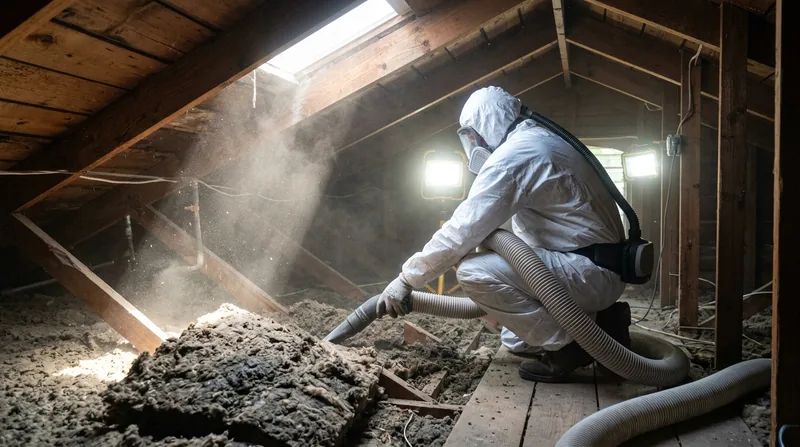




Insulation Removal in Lakeland is the essential first step before any spray foam retrofit. Lakeland's housing stock spans older bungalows around Lake Hollingsworth and Lake Mirror to mid-century block homes and newer subdivisions along the I-4 corridor toward Winter Haven and Bartow. Most homes sit on a slab on grade, but the real problem sits overhead: attics filled with old, settled fiberglass, cellulose, or failed spray foam that no longer seals against the long, hot, humid cooling season. When insulation settles, compacts, or deteriorates, it creates air gaps and moisture pathways that new foam cannot seal over. We remove the old material completely so new spray foam adheres properly and performs as designed. This is not optional work; it is the foundation of every successful attic and wall retrofit in this climate.
Why Insulation Removal Matters in Lakeland's Climate
Lakeland's cooling season runs long and hard, with humidity that never really lets up. Vented attics pull in damp outside air all year, and that moist heat sits directly above block walls and ductwork. When old insulation settles, it loses contact with the attic floor and framing, creating thermal breaks and moisture pathways. Spray foam seals these gaps, but only if it bonds to a clean, dry substrate. Leaving failed or settled insulation in place is like painting over rust: the new material cannot perform, and the problem spreads.
- Settled fiberglass and cellulose lose R-value and create air channels that allow humid outside air to reach unconditioned spaces.
- Old spray foam that has deteriorated or was installed too thin cannot support new foam adhesion and will separate under thermal stress.
- Block wall cavities with compacted insulation offer little resistance once original material has settled, especially in mid-century homes across Lakeland and Auburndale.
- Moisture-damaged or contaminated insulation must be removed before foam application to prevent mold growth and substrate failure.
- Removing old material gives us a clean surface to inspect for roof leaks, structural damage, and moisture, so we fix the real problem first.
Proper removal is the only way to ensure new foam seals correctly and lasts.
Key info: Lakeland's Polk County building department governs insulation work under the energy and building code in force at your address. Attic ventilation, ignition barriers, and thermal barriers are code-driven, never optional. Always defer to your local building official on what applies to your home. You can verify requirements at your city's building or planning department website or by calling (863) 777-4948 to discuss your specific address.
How We Remove Old Insulation and Prepare for New Spray Foam
Removal is methodical and protective. We isolate the work area, use mechanical ventilation and containment to keep dust and debris from spreading into living spaces, and remove all old material down to the substrate. We inspect as we go: checking for roof leaks, mold, moisture, structural damage, and pest activity. Once the space is clean and dry, we assess the substrate, repair or replace damaged wood, and seal any active moisture sources before foam application begins. This approach takes longer than a quick haul-out, but it prevents the failures and callbacks that plague rig-and-run outfits.
- We set up containment and mechanical ventilation to protect your home and minimize disturbance to occupied areas during removal.
- We remove all old insulation material, including any failed spray foam, and haul it off site for proper disposal.
- We inspect the attic floor, framing, and roof deck for leaks, moisture, mold, and structural damage, and document findings in your estimate.
- We repair or replace damaged wood, air seal penetrations and gaps, and allow the substrate to dry fully before foam application.
- We confirm that moisture sources are fixed and the space is ready for new foam, or we schedule a return visit after repairs are complete.
This disciplined process is why new foam performs and lasts in Lakeland's humid climate.
Example: A homeowner in Plant City called because her upstairs bedroom was unbearably hot. We removed settled fiberglass from her attic and discovered a roof leak above the master bedroom and moisture staining on the rim joist. We did not spray foam over that leak. We referred her to a roofer, waited for the repair, then returned to apply closed cell foam once the substrate was dry. Her cooling bills dropped and the room temperature equalized. That is the right sequence, and it is what we do.
Removal Methods and Substrate Preparation
| Approach | Description | Best for |
|---|---|---|
| Attic insulation removal | Complete removal of old fiberglass, cellulose, or failed spray foam from attic floor and framing; disposal on site or off site; full substrate inspection and repair. | Homes with settled or deteriorated insulation; preparation for new attic spray foam or closed cell foam retrofit. |
| Wall cavity removal | Removal of old insulation from block wall cavities or stud walls via access holes; substrate cleaning and drying before injection foam application. | Mid-century block homes with compacted or moisture-damaged cavity insulation; retrofit without demolition. |
| Crawl space insulation removal | Removal of old insulation batts, blankets, or debris from crawl space joists and rim; moisture assessment and substrate prep for new closed cell foam. | Older bungalows near Lakeland lakes with crawl spaces; homes with moisture or mold concerns before encapsulation. |
| Substrate repair and sealing | Repair of water-damaged wood, replacement of compromised framing, sealing of air leaks and penetrations, moisture drying confirmation before foam. | Any retrofit site where removal uncovers roof leaks, pest damage, or moisture; ensures foam adheres to sound substrate. |
Each method is tailored to the space and the problem. Removal is always the precondition of durable foam performance.
Insulation Removal Cost in Lakeland: What to Expect
Insulation removal pricing depends on the volume of material, the condition of the substrate, accessibility, and the scope of any repairs. A straightforward attic removal in a Lakeland bungalow typically starts at $950 and moves upward based on square footage, material type, and disposal. Wall cavity removal or crawl space work adds complexity and cost. If removal uncovers roof leaks, water damage, or structural issues that must be repaired before foam can be applied, the total project scope and timeline extend. We provide a written estimate with R-value and thickness specifications before any work begins, so you know exactly what is included and why the price is set where it is.
- Attic removal: volume of material, attic access difficulty, and condition of the substrate drive the base cost.
- Wall cavity removal: number of cavities, wall height, and access method (drilling, cutting) affect labor and time.
- Crawl space removal: moisture, debris, and accessibility to joists and rim determine scope and pricing.
- Substrate repair: water damage, rot, or structural issues discovered during removal are quoted separately and must be addressed before foam application.
- Disposal: old insulation disposal is included in our estimate; hazardous materials like vermiculite are left in place and flagged for professional testing.
The cost of proper removal is far less than the cost of foam applied over failed insulation or compromised substrate. Get a free written estimate and compare: you will see why doing it right the first time saves money in the long run.
Insulation Removal Near Me: What Lakeland Homeowners Should Know When Hiring
Hiring the right contractor for insulation removal is as important as hiring the right contractor for foam installation. Look for a contractor who is fully insured, who provides a detailed written estimate with R-value and thickness specifications, and who can explain the removal process and any substrate repairs that may be needed. Ask for references from recent jobs in Lakeland, Winter Haven, or Bartow. Verify that the contractor understands local permitting requirements and will work with your building department if permits are required. If your home is in an HOA, confirm that exterior work on metal buildings or rim joist access is permitted under your architectural guidelines. Do not accept an estimate with no R-value specification, no thickness detail, or a price far below market: these are red flags for a rig-and-run outfit that will spray over problems and disappear when the smell will not go away.
- Ask the contractor to verify they are fully insured and to provide proof of coverage before work begins.
- Request a detailed written estimate that specifies the removal scope, substrate condition, any repairs needed, and the cost of each.
- Check references from recent jobs in your area; speak directly to homeowners about their experience and results.
- Confirm that the contractor understands local Lakeland building code and permitting requirements for your address.
- If you have an HOA, verify that removal and foam work are permitted under your architectural guidelines before booking.
A local contractor with a local address, local plates, and a track record in Lakeland is your best protection against the national franchises and the out-of-state rigs that leave you holding the problem.
Call us at (863) 777-4948 for a free estimate and honest guidance on what your home needs. We have been in business since 2009, and we stand behind every job we do.
Insulation Removal in Lakeland: Pricing Guide
| Service | Price | Details |
|---|---|---|
| Attic insulation removal | Starting at $950 | Complete removal of old fiberglass or cellulose from attic floor; includes substrate inspection, cleanup, and disposal of material |
| Wall cavity removal and prep | Starting at $1,200 | Removal of old insulation from block wall cavities via access holes; includes substrate cleaning and moisture assessment before foam |
| Crawl space removal and repair | Starting at $1,400 | Removal of old insulation from crawl space joists and rim; includes moisture evaluation and minor wood repair before new foam application |
| Substrate repair and sealing | On estimate | Water damage, rot, or structural issues uncovered during removal are quoted separately; must be fixed before foam application proceeds |
| Free written estimate | No charge | Response within 24 hours at (863) 777-4948; includes R-value and thickness specs; no obligation to book work |
Indicative pricing, the exact cost depends on square footage, finish, and site access. Free personalized estimate within 24h at (863) 777-4948.


