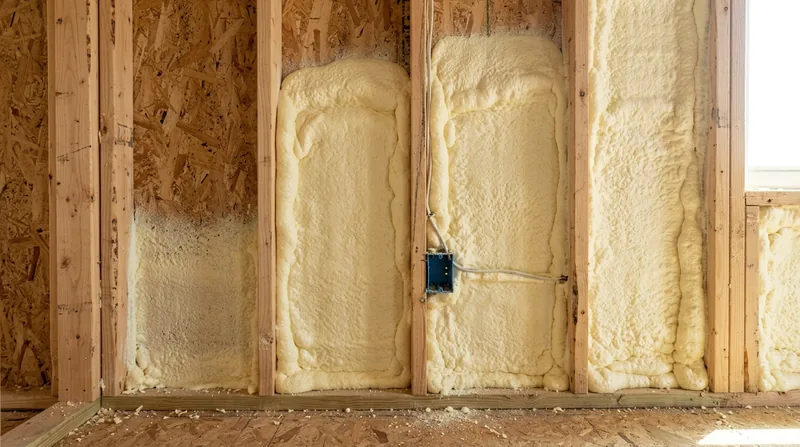




Open Cell Spray Foam Insulation in Lakeland is a practical choice for homeowners managing the region's long cooling season and persistent humidity. Lakeland's housing stock spans older lake-district bungalows with crawl spaces, mid-century block homes with settled insulation, and newer subdivisions along the I-4 corridor where rooms over garages run especially hot. In this IECC climate zone 2A, vented attics pull in damp outside air all year, and that heat load sits directly above block walls and ductwork, pushing cooling bills through the season. Open cell foam fills stud cavities and rooflines efficiently, balances sound in interior walls, and handles the moisture challenge that drives inward most of the year. Unlike closed cell, open cell breathes and costs less per board foot, making it a strong option for interior applications where vapor management and sound dampening matter. We help Lakeland homeowners choose between open cell and closed cell based on actual use, not on margin, and we walk away from jobs where the cheaper option is the right one.
Why Open Cell Spray Foam Makes Sense in Lakeland's Humid Climate
Lakeland sits in a region where moisture moves inward from June through November and beyond. Vented attics in the mid-century and newer stock pull humid air into the cavity all cooling season, and that damp air condenses on cooler surfaces when the AC runs. Open cell foam fills those cavities, stops the air leakage that draws in moisture, and its semi-permeable structure lets the wall dry toward the interior if moisture does enter. It works especially well in interior walls of newer homes along the I-4 corridor, where sound control and thermal resistance are both needed without the cost and density of closed cell.
- Open cell foam seals air leakage in stud cavities and rooflines, reducing the humid outside air that enters during the cooling season.
- The semi-permeable structure allows trapped moisture to dry toward the interior, a critical advantage in Florida's year-round humidity.
- Sound dampening in interior walls of newer subdivisions reduces noise transmission between rooms and from outdoor traffic.
- Lower cost per board foot than closed cell makes it the practical choice for large attic jobs and wall cavities where vapor permeability is an asset, not a liability.
- Open cell foam in a sealed attic (no vents) creates a continuous air barrier that stops the stack effect pulling humid air upward through the home.
When you seal an attic properly with open cell foam and mechanical ventilation during cure, you stop the moisture leak before it starts.
Key info: A homeowner in Auburndale with a mid-century block home and settled fiberglass in the attic was running the AC harder each summer. We sprayed open cell foam in the attic, sealed the rim joist where humid air was entering, and installed a mechanical vent during cure. The home dried out, and cooling costs dropped noticeably by the second month. The same principle applies to newer subdivisions near Winter Haven, where rooms over garages benefit from open cell foam in the rim joist and garage ceiling.
For detailed information on how moisture and air leakage interact in Lakeland's climate, check our air sealing service page.
How We Install Open Cell Spray Foam in Lakeland Homes
Open cell spray foam is applied in controlled passes, building thickness and density layer by layer. The process requires precise equipment setup, correct drum temperature, and the manufacturer ratio of resin to catalyst. Mechanical ventilation runs during the cure period to remove VOCs and let the foam fully cure before re-entry. A written estimate includes R-value, thickness, and board-foot coverage so you know exactly what you are paying for and what performance you will get.
- We inspect the attic or cavity, identify air leaks, moisture sources, and substrate condition before any foam goes down.
- We set up the spray rig with proper ventilation, temperature control, and safety barriers to contain overspray and fumes.
- We spray open cell foam in controlled passes, building the specified R-value and thickness without voids or compression.
- We run mechanical ventilation for the full cure period, typically 24 to 48 hours, and provide a re-entry window in writing.
- We leave the site clean and provide a written estimate with R-value, thickness, and board-foot specs so you have a record of what was installed.
Proper installation is the difference between a job that lasts and one that fails. We follow the manufacturer protocol every time.
Example: A homeowner in Plant City had a vented attic with 1970s fiberglass that had settled to R-3 in places. We removed the old insulation, sealed the attic vents, and sprayed open cell foam to R-19 with a continuous air barrier. We ventilated the space mechanically for 36 hours, then provided a written re-entry window. The home stayed cool all summer, and the owner could feel the difference in quietness and comfort. That is the standard we apply to every job, whether it is a simple attic top-up in Lakeland or a full sealed roof deck in Haines City.
Learn more about our approach to attic spray foam insulation and why sealed attics perform better in Florida's climate.
| Approach | Description | Best for |
|---|---|---|
| Open Cell Spray Foam in Attics | Applied to roof deck or attic floor, 3.5 to 6 inches for R-13 to R-21, continuous air barrier with mechanical ventilation during cure. | Sealed attics where cost and sound control matter, and moisture management is critical in humid climates. |
| Open Cell in Interior Walls | Sprayed into stud cavities after drywall removal or in new construction, 3.5 to 5.5 inches for R-13 to R-19, semi-permeable vapor profile. | Interior partition walls in newer subdivisions where sound dampening and thermal comfort are priorities. |
| Open Cell in Rim and Band Joists | Applied to the rim joist band above the foundation, 1.5 to 3 inches, seals the air leak where humid outside air enters the frame. | Entry point for humid air in older lake-district bungalows and mid-century block homes, especially critical in Polk County. |
| Open Cell in Garage Ceilings | Applied to the underside of the roof deck or between ceiling joists, 3.5 to 5.5 inches, creates thermal break above the garage. | Rooms over garages in newer subdivisions along the I-4 corridor, where radiant heat from the garage roof drives cooling load. |
Open Cell Spray Foam Insulation Cost in Lakeland: What to Expect
Open cell spray foam typically starts at around $0.55 per board foot, making it the most cost-effective spray foam option for attics and interior walls. The final cost depends on the thickness needed for your R-value target, the size of the cavity, access for the spray rig, and whether existing insulation must be removed first. A 1,000-square-foot attic sealed to R-19 with open cell foam typically runs between $1,500 and $2,500 before any removal work. Interior wall cavities cost less per job but are priced per board foot on site. Getting two or three written estimates with R-value and thickness specs is the only way to compare apples to apples.
Removal of old insulation, substrate repair, and mechanical ventilation during cure are separate line items that affect the total. If the attic has settled fiberglass, vermiculite (which we do not disturb), or old blown-in cellulose, removal adds time and cost. We provide a written estimate that breaks down each component so you know what you are paying for. For detailed pricing guidance and a breakdown by service type, visit our pricing page.
Open Cell Spray Foam Insulation Near Me: What Lakeland Homeowners Should Know When Hiring a Contractor
Hiring the right spray foam contractor is as important as the product itself. The insulation trade has rig-and-run crews (out-of-state trailers, jobs sprayed in an afternoon, nobody reachable when the smell does not go away) and national franchises, and the local independent contractor is positioned against both. Before you sign, verify that the contractor is fully insured and can provide proof of coverage. Ask for a written estimate that includes R-value, thickness, and board-foot specs, never a price per square foot or a vague "from $X" floor. Check references from recent jobs in Lakeland, Winter Haven, or Bartow, and ask about the cure time and re-entry window.
- Confirm the contractor is fully insured and ask to see the insurance certificate before work begins.
- Get a written estimate with R-value, thickness in inches, and total board feet so you can compare quotes accurately.
- Ask about permitting: attic ventilation, ignition barriers, and thermal barriers are governed by the building code at your address, and the contractor should defer to the local building official, not promise to "handle" code compliance.
- Check references from recent jobs in your area and ask whether the homeowner experienced odor, cure time, or re-entry issues.
- Ask about the mechanical ventilation protocol during cure and the stated re-entry window, typically 24 to 48 hours.
- Verify that any estimate includes removal of existing insulation if needed, substrate inspection, and cleanup on your timeline, not the contractor's.
A contractor who walks away from a job because the moisture is not fixed first, or because blown-in is the right answer, is the one you want.
Ready to get a free written estimate? Contact us today at (863) 777-4948 for a no-obligation consultation.
Open Cell Spray Foam Insulation in Lakeland: Pricing Guide
| Service | Price | Details |
|---|---|---|
| Open Cell Spray Foam in Attics | Starting at $0.55/board ft | Sealed attic to R-19, includes mechanical ventilation during cure and written R-value and thickness specs |
| Open Cell in Interior Walls | Starting at $0.55/board ft | Stud cavity fill for sound and thermal control, priced per board foot on site based on cavity size and access |
| Rim and Band Joist Sealing | Starting at $0.60/board ft | Smaller volumes, higher labor intensity per board foot, critical moisture control point in older Lakeland homes |
| Insulation Removal and Replacement | On estimate | Removal of old fiberglass, cellulose, or failed foam adds labor and disposal; quoted with new foam as a complete package |
| Free Written Estimate | No charge | Response within 24 hours at (863) 777-4948, includes R-value, thickness, board feet, and itemized cost breakdown |
Indicative pricing, the exact cost depends on square footage, finish, and site access. Free personalized estimate within 24h at (863) 777-4948.


