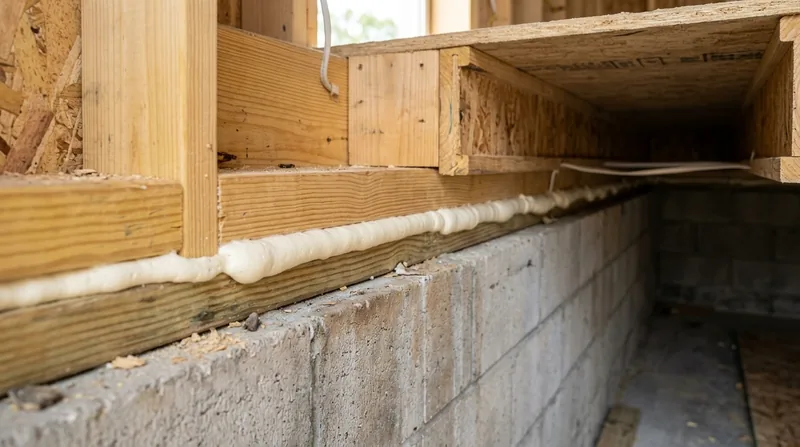




Rim joist and band joist spray foam insulation in Lakeland seals the gap between your home's foundation and the first floor, where humid outside air meets your conditioned living space. Homes across Lakeland, Winter Haven, Bartow, and Auburndale sit on slab-on-grade or shallow crawl spaces, and the rim and band joists that frame that transition are a direct pathway for moisture and drafts. In this climate, where humidity runs year-round and summer heat pushes damp air inward through every unsealed cavity, blocking that junction cuts both cooling load and the moisture that drives mold risk in the floor system. Spray foam closes the gap completely, seals penetrations for plumbing and electrical, and stops the convection loop that makes older block homes and newer I-4 corridor subdivisions sweat. If your first floor is cooler than it should be or you smell mustiness near the slab, the rim joist is almost always the culprit.
Why Rim Joist and Band Joist Sealing Matters in Lakeland's Humid Climate
The rim joist sits right where your foundation meets the floor frame, and in Lakeland's heat and humidity, it is the single biggest air leak in homes that lack a sealed attic. Outside air at 92 degrees and 75 percent relative humidity pushes inward through any gap in the rim, and that moisture condenses on cooler surfaces inside the rim cavity and the floor system above. Block walls, concrete, and the band joist itself absorb that moisture, and the wood rim board and rim band start to degrade. Your cooling system works harder because the first floor is harder to condition, and the moisture creates an environment where mold can take hold if the right conditions align.
- Spray foam seals the entire rim cavity in a single pass, closing gaps that fiberglass batts and caulk miss.
- Closed-cell foam creates a vapor retarder that stops moisture from moving inward during the long humid season.
- The seal is permanent and does not settle or shift like blown-in insulation.
- Sealing the rim joist often brings immediate comfort improvement on the first floor, especially in older homes near the lakes.
In Polk County homes built before 1980, the rim joist is often uninsulated or filled with deteriorated fiberglass, and the block walls around it have no continuous air barrier. Newer subdivisions along the I-4 corridor sometimes have rim board insulation, but it is often incomplete or poorly sealed at the corners and penetrations.
Key info: A typical mid-century block home in Lakeland with an uninsulated rim joist will lose conditioned air to the crawl space or rim cavity year-round. In summer, that loss pulls in hot humid air that your air conditioner has to cool, and in the shoulder seasons, it creates a cold-floor complaint that homeowners attribute to the HVAC system rather than the rim.
For more on how air sealing connects to your whole-home efficiency, see our air sealing service page.
How We Seal Your Rim and Band Joist in Lakeland
Rim joist spray foam starts with a site inspection to map the rim cavity, check for moisture, and identify any structural issues or plumbing and electrical penetrations. We measure the rim length and cavity depth, confirm the substrate is dry, and determine whether closed-cell or open-cell foam is the right choice for your situation. The work is straightforward but detail-driven: improper thickness or ratio will leave gaps or create a weak seal.
- We inspect the rim cavity and document any moisture, gaps, or existing insulation that needs removal.
- We protect the crawl space or basement below with plastic sheeting and mark the spray zone.
- We spray closed-cell foam at the specified thickness, typically 2 to 3 inches, to fill the cavity and create a continuous seal.
- We allow the foam to cure per manufacturer guidance, usually 24 to 48 hours, before the space is re-entered or covered.
- We verify the seal visually and document the job with photos and written specs for your records.
A typical rim joist job in a Lakeland home takes 4 to 6 hours from setup to cleanup, depending on the rim length and the number of penetrations. If the crawl space is wet or the rim board shows rot, we stop and recommend the moisture be addressed first.
Example: A 1970s block home in Plant City with a vented crawl space and uninsulated rim had a cold first floor and a musty smell near the slab. After we sealed the rim joist with 2.5 inches of closed-cell foam, the homeowner reported the first floor was warmer and the smell was gone within a week. The crawl space stayed dry because the foam stopped the outside air from entering.
For homes with both rim joist and attic issues, see our attic spray foam service to understand how the two work together.
Rim Joist Spray Foam Methods and Foam Types
| Approach | Description | Best for |
|---|---|---|
| Closed-Cell Spray Foam | High-density foam with an R-value of 6.0 to 6.5 per inch, acts as an air barrier and vapor retarder, cures in 24 hours. | Lakeland homes in humid climates where moisture control is critical, crawl spaces, and any rim with a history of moisture or mold concern. |
| Open-Cell Spray Foam | Lower-density foam with an R-value of 3.5 to 3.8 per inch, allows vapor transmission, cures in 24 to 48 hours. | Interior rim cavities in conditioned crawl spaces where moisture is managed by ventilation or dehumidification, and for budget-conscious jobs in dry conditions. |
| Partial Rim Fill with Fiberglass Top-Up | Spray 1 to 2 inches of foam to seal, then add fiberglass batts to fill the cavity depth, reducing material cost while maintaining the air seal. | Homeowners seeking a lower-cost entry point, rim cavities that are fully dry, and homes where foam volume is constrained by depth or access. |
| Rim Joist with Crawl Space Encapsulation | Spray foam rim joist as part of a complete crawl space moisture control strategy, including vapor barrier and dehumidification planning. | Older Lakeland and Polk County homes with shallow crawl spaces, persistent moisture, or mold history that require whole-system moisture management. |
Closed-cell foam is the standard choice in Lakeland because humidity is constant and the vapor-blocking property of closed-cell protects the rim board and floor system from moisture moving inward. Open-cell can work in a conditioned crawl space where a dehumidifier is in place, but it does not provide the same moisture barrier.
Rim Joist and Band Joist Spray Foam Cost in Lakeland: What to Expect
Rim joist spray foam in Lakeland typically starts at $650 to $1,200 for a standard single-story home with a rim length of 100 to 150 linear feet and a cavity depth of 8 to 12 inches. The cost is driven by the total board-foot volume, which is calculated on site from the rim length, cavity width, and foam thickness. Closed-cell foam costs more per board foot than open-cell, and a full-depth seal costs more than a partial fill topped with fiberglass.
Factors that move the price include the condition of the substrate (if the rim board is wet or rotten, we address that first or walk away), the number of plumbing and electrical penetrations (more sealing work), and access (a crawl space that is tight or has standing water adds labor). A home in Lakeland with an attached garage or a wrap-around rim will have a longer perimeter and a higher total. A small ranch in Auburndale or Mulberry with a simple rectangular footprint will be on the lower end.
Always get written estimates from two or three contractors that spell out the foam type, thickness, R-value, and total board feet. A low estimate with no specs is a red flag. For a detailed pricing breakdown and to see what your specific rim joist job might cost, visit our pricing page.
Real example: A 1960s block home in Bartow with a 140-foot rim, 10-inch cavity, and 2.5 inches of closed-cell foam came to approximately $950 in material and labor. The homeowner also had a small area of water staining on the rim board, so we recommended a moisture assessment before spraying. Once that was cleared, the job took one day and the first floor temperature improved noticeably within a week.
Rim Joist and Band Joist Spray Foam Near Me: What Lakeland Homeowners Should Know When Hiring
When you are looking for a spray foam insulation contractor near Lakeland to seal your rim joist, the first step is to verify that the contractor is fully insured and can show you a current certificate of insurance. Ask whether they carry general liability and workers' compensation. Request references from recent rim joist and crawl space jobs in your area, and call at least two to ask about the quality of the seal, how long the job took, and whether there were any issues after the work was done.
Get written estimates from at least two contractors that include the foam type, thickness in inches, R-value per inch, total board feet, and the cure time before re-entry. Do not accept an estimate that is missing these details. Ask whether the contractor will inspect the rim for moisture before starting, and whether they will document the job with photos and a written specification sheet for your records. If you have a crawl space, ask how they will protect the space during the spray and cure period.
Check whether your local building department requires a permit for rim joist spray foam. In Lakeland, permits vary by city and by the scope of work. A simple rim seal may not require a permit, but a larger crawl space project might. Call your city building department and ask. If a permit is required, a reputable contractor will help you understand what applies at your address and will not claim to handle permitting for you (permitting and registration vary by city, and there is no reciprocity across Greater Lakeland, so always defer to your local building official).
If you have an HOA, check the architectural rules to see whether exterior or crawl space work is subject to approval. Most HOA rules do not touch interior insulation work, but some master-planned areas in the I-4 corridor subdivisions have restrictions on exterior access or landscaping disruption, so it is worth confirming before you book.
Ready to get started? Contact us for a free, no-obligation estimate. We will inspect your rim joist, explain what we find, and give you a written price with no surprises. Call (863) 777-4948 or fill out our estimate form and we will respond within 24 hours.
Rim Joist & Band Joist Spray Foam in Lakeland: Pricing Guide
| Service | Price | Details |
|---|---|---|
| Standard Rim Joist Seal | Starting at $650 | Closed-cell foam, 2 to 2.5 inches, typical 100 to 120 linear feet, includes setup and cleanup |
| Extended Rim or Wrap-Around | Starting at $950 | 140 to 180 linear feet with garage or complex footprint, closed-cell, full depth seal with penetration sealing |
| Partial Fill with Fiberglass Top-Up | Starting at $500 | 1.5 to 2 inches of foam for air seal, remainder filled with batts, lower cost option for dry rim cavities |
| Moisture Assessment or Substrate Prep | On estimate | If rim board shows water staining or soft spots, moisture evaluation and any prep work is quoted separately before foam |
| Travel and Setup | Included | No separate mileage fee or travel charge within Lakeland and surrounding service areas in Polk and Hillsborough counties |
| Free Estimate | No charge | Site inspection, written specs with R-value and thickness, no obligation, response within 24 hours at (863) 777-4948 |
Indicative pricing, the exact cost depends on square footage, finish, and site access. Free personalized estimate within 24h at (863) 777-4948.


