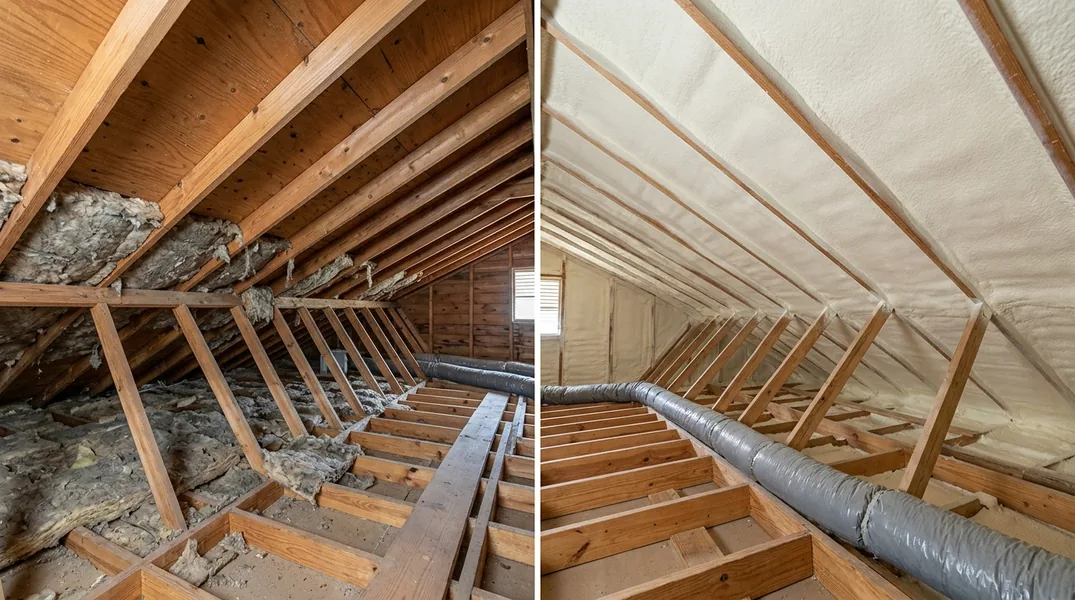
The Insulation Problem in Lakeland's Mid-Century Block Homes
If you own a mid-century block home in Lakeland, you're likely familiar with the challenges that come with older construction. Many of these charming homes were built in the 1950s through 1970s when insulation standards were far less stringent than today. The result is an attic that often feels like a sauna in summer and a refrigerator in winter, driving up your energy bills year after year.
Block homes present a unique insulation challenge because their concrete or cinder block walls have minimal thermal resistance compared to modern construction. Add to that the fact that many of these homes were never properly insulated in the attic, and you have a recipe for energy inefficiency. Homeowners in Lakeland dealing with this issue often find themselves asking which insulation solution will actually solve the problem without breaking the bank. That's where understanding the differences between spray foam, blown-in insulation, fiberglass, and cellulose becomes critical.
Spray Foam vs Blown-In Insulation: Performance and Durability
When comparing Attic Spray Foam Insulation to blown-in insulation, the differences go far beyond initial installation. Blown-in insulation, whether cellulose or fiberglass, is poured or blown into attic cavities and settles over time. While it's less expensive upfront, it typically settles and compresses within the first year, reducing its R-value effectiveness. Spray foam, by contrast, expands to fill every gap and crack, creating an air-tight seal that remains stable for decades.
The durability advantage of spray foam is particularly important in Lakeland's humid subtropical climate. Blown-in insulation can absorb moisture, which compromises its insulating ability and can lead to mold growth in your attic. Spray foam, especially Closed Cell Spray Foam Insulation, acts as a moisture barrier, protecting your attic from humidity infiltration. This moisture resistance means your insulation won't degrade over time, maintaining its R-value and performance year after year.
Spray Foam vs Fiberglass: Why Modern Homes Choose Spray Foam
Fiberglass batts and rolls have been the standard for decades, and they're still widely used because they're affordable and easy to install. However, fiberglass has significant limitations that become apparent in older homes like mid-century block construction. Fiberglass only insulates where it's placed, leaving air gaps around pipes, wires, and irregularly shaped spaces. These gaps create thermal bridges that allow conditioned air to escape, reducing the overall effectiveness of your insulation system.
Spray foam, whether Open Cell Spray Foam Insulation or closed cell, conforms to every surface and seals every opening. This complete coverage means no air leaks, no thermal bridges, and no wasted energy. Fiberglass also settles and compresses over time, especially in attics where temperature fluctuations are extreme. In Lakeland's climate, where attic temperatures can exceed 140 degrees in summer, fiberglass degrades faster than in cooler regions. Spray foam maintains its structural integrity and R-value regardless of temperature swings.
Spray Foam vs Cellulose: Efficiency and Environmental Considerations
Cellulose insulation is made from recycled paper and is often marketed as the eco-friendly choice. While the environmental credentials are genuine, cellulose has practical drawbacks that make it less suitable for attic applications in older homes. Cellulose is highly susceptible to moisture absorption, which is a major concern in Florida's humid environment. Once cellulose absorbs moisture, it loses its insulating value and becomes a breeding ground for mold and mildew.
Cellulose also requires settling time and can shift within the attic, creating gaps that reduce its effectiveness. Additionally, cellulose is treated with fire retardants that can degrade over time, particularly in hot attics. Spray foam offers a more reliable long-term solution without the moisture vulnerability. Modern spray foam products are increasingly manufactured with sustainable practices and renewable content, making them a responsible choice that doesn't sacrifice performance for environmental concerns. When you invest in spray foam insulation for your mid-century block home, you're choosing durability and efficiency that will serve you well for 20, 30, or even 40 years.
Best Insulation for Attic: Why Spray Foam Wins for Block Homes
Determining the best insulation for attic spaces requires considering your specific home's needs. For mid-century block homes in Lakeland, spray foam consistently outperforms other options because it addresses the unique challenges these structures present. Block homes have thermal mass that radiates heat, and irregular attic spaces with pipes, wires, and structural elements that create obstacles for traditional insulation methods. Spray foam fills these spaces completely, eliminating air infiltration and providing superior thermal resistance.
Another advantage of spray foam in block home attics is its structural contribution. The foam adds rigidity to the attic space and can even help prevent moisture intrusion into the walls themselves. When you choose spray foam for your attic, you're not just improving insulation values, you're creating a sealed, controlled environment that protects your entire home. The energy savings typically range from 15 to 30 percent on heating and cooling costs, which means your investment pays for itself within 5 to 10 years for most homeowners.
Attic Spray Foam Insulation Cost in Lakeland: What to Budget
The pricing for spray foam insulation is higher than blown-in, fiberglass, or cellulose on a per-square-foot basis. However, this comparison overlooks the long-term value proposition. While blown-in insulation might cost 30 to 50 percent less initially, spray foam's durability, air-sealing properties, and energy efficiency mean lower operating costs over the life of your home. Most homeowners find that the superior performance of spray foam justifies the higher upfront investment, especially in older homes where energy inefficiency is costing them money every month.
Your actual cost will depend on your attic's size, current insulation condition, and whether you choose open cell or closed cell spray foam. Closed cell foam provides higher R-value per inch and better moisture resistance, making it the preferred choice for Florida homes, but it costs more than open cell. The best way to understand the cost and value for your specific situation is to request a free estimate from Lakeland Spray Foam Insulation. Call (863) 777-4948 to discuss your project with an expert who can evaluate your attic and provide transparent pricing based on your actual needs.
Attic Spray Foam Insulation Near Me: When to Call a Professional
If you're experiencing high energy bills, uneven temperatures throughout your home, or signs of moisture in your attic, it's time to call a professional. Diagnosing insulation problems and determining the best solution requires expertise that goes beyond online research. A qualified contractor will inspect your attic, assess your current insulation condition, identify air leaks, and recommend the most effective solution for your mid-century block home's specific situation.
Lakeland Spray Foam Insulation specializes in serving homeowners throughout Lakeland with professional attic insulation solutions. Our team understands the unique challenges of older block homes and has the equipment and expertise to install spray foam properly, ensuring maximum performance and durability. If you're ready to stop wasting energy and money on inadequate insulation, reach out today at (863) 777-4948 or visit our website to request your free estimate. We're here to help you make an informed decision and transform your attic into a properly insulated space that keeps your home comfortable year-round.
Looking for a professional spray foam insulation contractor in Lakeland? Lakeland Spray Foam Insulation responds fast for all your spray foam insulation needs.
Get a Free Quote