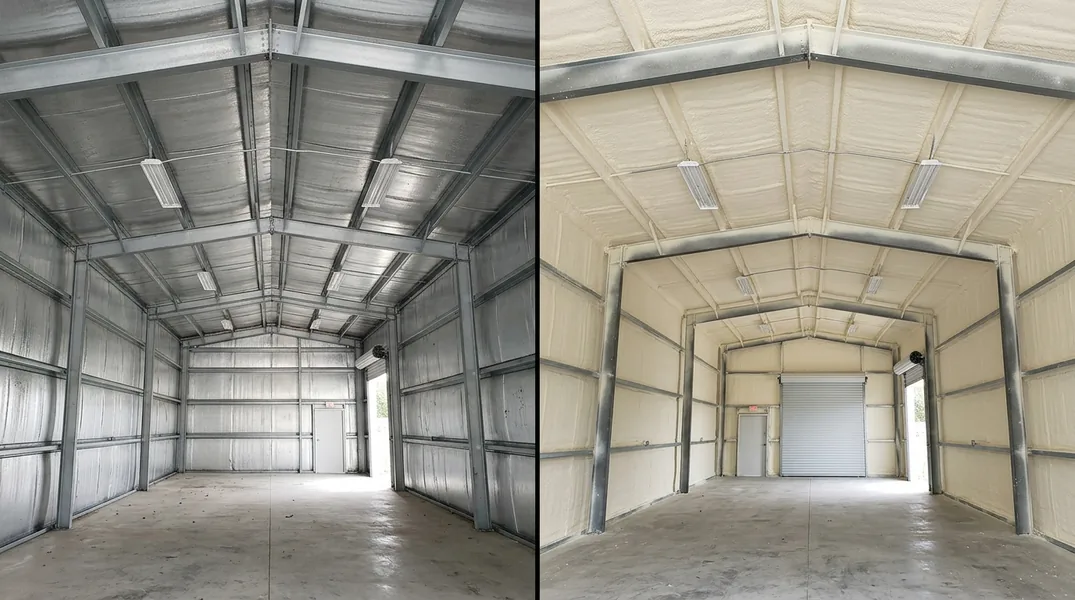
Understanding Spray Foam Insulation for Lakeland Homes
Attic Spray Foam Insulation has become increasingly popular among homeowners in Lakeland who want to improve energy efficiency and comfort. Unlike traditional fiberglass batts or blown-in cellulose, spray foam creates an air-tight seal that reduces heat transfer and air leakage. This makes it particularly valuable in Florida's warm, humid climate where cooling costs can dominate your energy bills.
When you're evaluating spray foam options, you'll encounter two main types: open cell and closed cell. Both are applied as liquid that expands to fill cavities, but they differ significantly in structure, performance, and suitability for different applications. Understanding these differences is essential before deciding which type makes sense for your home's specific needs and your budget.
What Is Open Cell Spray Foam Insulation?
Open Cell Spray Foam Insulation features a structure where the cells are not completely enclosed. This creates a softer, more flexible material that typically has an R-value of approximately 3.5 to 3.8 per inch. Because the cells are open, water vapor can pass through the foam, making it semi-permeable. This characteristic can be advantageous in certain climates, but it requires careful consideration in humid environments like Lakeland.
Open cell foam is generally less expensive than closed cell, making it an attractive option for budget-conscious homeowners. It's also lighter, easier to cut, and provides excellent sound dampening properties. However, because it allows moisture vapor to travel through it, open cell foam is not recommended for applications where moisture control is critical, such as crawl spaces or areas prone to water intrusion. For attic applications in Lakeland, open cell can work well if your attic is properly ventilated and you have adequate moisture management in place.
What Is Closed Cell Spray Foam Insulation?
Closed Cell Spray Foam Insulation has a denser structure where the cells are completely enclosed, creating a rigid, high-strength material. This type delivers an R-value of approximately 6.0 to 7.0 per inch, which is nearly double that of open cell foam. The closed cell structure also makes it impermeable to water vapor and liquid water, providing superior moisture protection that's especially valuable in Florida's humid climate.
The superior insulating power and moisture resistance of closed cell foam come at a higher cost compared to open cell options. However, the investment often pays dividends through reduced energy consumption and enhanced protection against mold growth and moisture-related damage. Closed cell foam also adds structural integrity to walls and attics, which can be beneficial in areas prone to high winds or severe weather. For homeowners in Lakeland looking to create a truly sealed attic environment with maximum performance, closed cell is typically the preferred choice despite the higher upfront pricing.
Sealed Attic Insulation: Why It Matters in Lakeland's Climate
Florida's hot, humid climate presents unique challenges for home insulation. Lakeland experiences high outdoor humidity levels and intense solar heat gain, both of which can compromise traditional insulation systems. Attic Spray Foam Insulation addresses these challenges by creating a sealed barrier that prevents conditioned air from escaping and unconditioned air from infiltrating your home.
An unvented attic spray foam system keeps your attic space at approximately the same temperature as the rest of your home, eliminating the extreme heat that builds up in traditional vented attics. This approach reduces the workload on your air conditioning system, leading to lower cooling costs and improved comfort. Additionally, a sealed attic prevents humid outdoor air from entering and condensing on cool surfaces, which reduces the risk of mold growth and wood rot. For Lakeland homeowners, this sealed approach is often more effective than ventilated attic designs because it works with Florida's climate rather than against it.
Comparing Performance: Open Cell vs. Closed Cell for Your Lakeland Home
When comparing these two foam types, several performance metrics matter. R-value per inch is important, but it's not the only consideration. Closed cell foam's superior R-value means you can achieve the same insulation performance with a thinner application, which is valuable if you have space constraints. However, open cell foam can still deliver adequate thermal resistance if applied at sufficient thickness, and the cost savings may offset the need for greater depth.
Moisture management is where the two types diverge most significantly for Lakeland applications. Closed cell foam's impermeability makes it ideal for humid climates and applications where moisture control is paramount. Open cell foam's breathability can actually be beneficial in certain cold climates with interior moisture sources, but in Florida's hot, humid environment, the moisture resistance of closed cell typically provides better long-term protection. Air sealing is excellent with both types, but closed cell's rigidity provides additional structural benefits and wind resistance that open cell cannot match. For most Lakeland homeowners seeking maximum performance and durability, closed cell spray foam emerges as the superior choice, despite the higher initial investment.
Attic Spray Foam Insulation Cost in Lakeland: What to Budget
Budget is a legitimate concern when evaluating spray foam options. Open cell foam typically costs between $0.50 and $1.00 per board foot, while closed cell foam ranges from $1.00 to $2.00 per board foot or higher, depending on application thickness and site conditions. For a typical 1,500 square foot attic, open cell might cost $3,000 to $6,000, while closed cell could range from $6,000 to $12,000 or more. These figures vary based on local labor rates, attic accessibility, and the specific contractor you choose.
It's important to view spray foam insulation as an investment rather than a pure expense. The energy savings from improved insulation efficiency often recover the installation cost within 5 to 10 years, particularly in Florida where cooling costs are substantial. Additionally, closed cell foam's superior moisture protection can prevent costly mold remediation and structural damage down the road. To understand the specific pricing for your home, reach out to Lakeland Spray Foam Insulation at (863) 777-4948 to discuss your project and receive a detailed estimate tailored to your attic's dimensions and your performance goals.
Making Your Decision: Which Foam Type Is Right for You?
Choosing between open cell and closed cell spray foam ultimately depends on your priorities, budget, and specific application. If your primary concern is cost and you have adequate attic ventilation already in place, open cell foam can deliver solid insulation performance. However, if you want to create an unvented, sealed attic that maximizes energy efficiency and moisture protection in Lakeland's humid climate, closed cell foam is the more robust choice.
Consider your home's age, current condition, and long-term plans. Older homes with moisture issues or those in areas prone to humidity infiltration benefit significantly from closed cell's superior moisture resistance. If you're planning to stay in your home for many years, the durability and performance advantages of closed cell often justify the higher upfront cost. The best way to determine which option makes sense for your specific situation is to consult with experienced professionals. Contact Lakeland Spray Foam Insulation today at (863) 777-4948 or visit our website to request a free estimate. Our team can evaluate your attic, discuss your goals, and recommend the spray foam solution that delivers the best value and performance for your home.
Looking for a professional spray foam insulation contractor in Lakeland? Lakeland Spray Foam Insulation responds fast for all your spray foam insulation needs.
Get a Free Quote