Why Block Homes in Lakeland Need Better Insulation
If you own a concrete block home in Lakeland, you already know that summer temperatures can feel relentless. The intense Florida heat doesn't just make your home uncomfortable; it forces your air conditioning system to work overtime, driving up energy costs month after month. Block construction, while durable and fire-resistant, has a critical weakness: it conducts heat directly into your living spaces. Without proper insulation, your walls become thermal highways, allowing outdoor heat to penetrate deep into your home.
Traditional insulation methods like fiberglass batts or blown-in cellulose leave gaps and air pockets that allow heat transfer and air leakage. These gaps are especially problematic in block homes, where uneven surfaces and hollow cores create natural pathways for hot air to infiltrate. This is where modern spray foam technology makes a real difference. By sealing every crevice and creating a continuous thermal barrier, spray foam insulation addresses the root cause of summer cooling inefficiency in block construction.
Understanding Metal Building Insulation and Its Advantages
When discussing the best insulation for metal buildings and block structures, spray foam consistently outperforms conventional alternatives. Metal building insulation faces unique challenges because metal conducts temperature rapidly and efficiently, making thermal bridging a serious issue. However, the same spray foam technology that works for residential block homes also excels in metal structures, barndominiums, and pole barns across the region.
Spray foam creates an uninterrupted seal that eliminates thermal bridging entirely. Unlike traditional insulation that may leave gaps around fasteners, seams, and irregular surfaces, foam expands to fill every void. This complete coverage is especially valuable in metal buildings, where condensation and temperature fluctuations can cause significant problems. The superior air-sealing properties of spray foam reduce infiltration, which means your HVAC system doesn't have to compensate for leaking conditioned air. For homeowners in Lakeland with metal structures or block homes, this translates directly to lower cooling costs during our nine-month cooling season.
Closed Cell vs. Open Cell: Which Spray Foam is Right for Your Lakeland Home
Closed Cell Spray Foam Insulation and Open Cell Spray Foam Insulation serve different purposes, and understanding the distinction helps you make the best choice for your specific situation. Closed cell foam has a higher R-value per inch (typically R-6 to R-7), making it ideal for attics, exterior walls, and metal building insulation where space is limited and maximum thermal resistance is needed. The dense cell structure also provides superior moisture resistance, which is critical in Florida's humid climate. Closed cell foam acts as both an insulator and a vapor barrier, protecting your home from moisture intrusion that could damage structure or promote mold growth.
Open cell foam, by contrast, is more cost-effective and still delivers excellent air-sealing performance. It's better suited for interior wall cavities where vapor permeability is desirable and where you have adequate space for the thicker application required to achieve comparable R-values. For most Lakeland homeowners with block homes facing intense summer heat, closed cell spray foam in the attic combined with strategic wall insulation provides the best return on investment. Your spray foam contractor can assess your home's specific needs and recommend the optimal approach during a free estimate.
Attic Spray Foam Insulation Near Me: When to Call a Professional
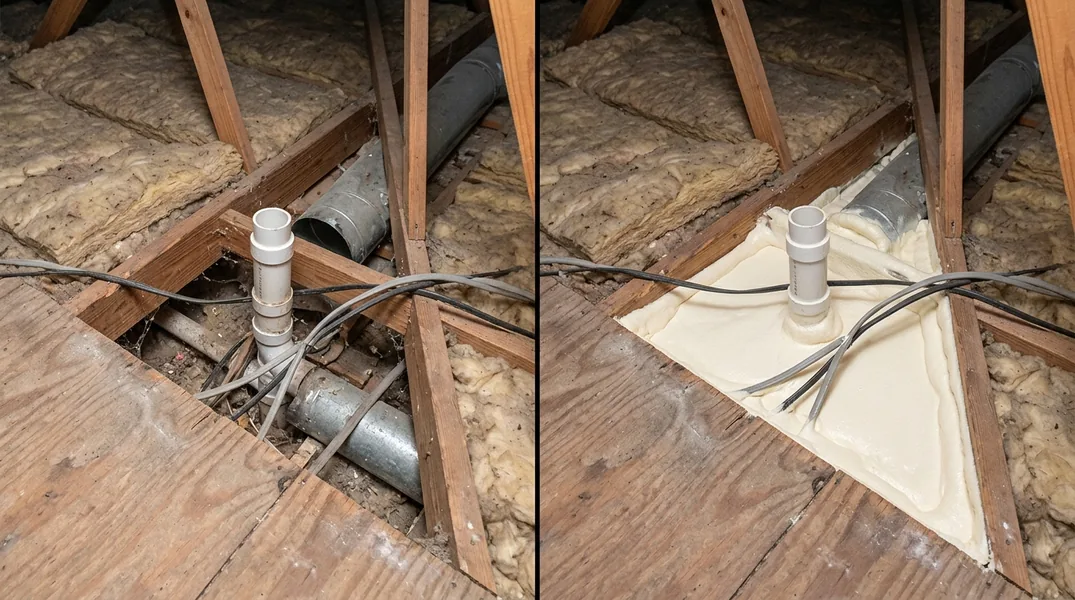
Your attic is ground zero for summer heat gain in block homes. Hot air rises, and if your attic lacks proper insulation, that heat radiates downward through your ceiling, overwhelming your AC system. Attic Spray Foam Insulation solves this problem by creating a sealed, insulated envelope that prevents heat from entering your living spaces. Professional spray foam application ensures complete coverage, including hard-to-reach corners, around roof penetrations, and along the eaves where traditional insulation often falls short.
The installation process requires specialized equipment and training. Professional technicians understand ventilation requirements, building codes, and the specific challenges of attic environments. They ensure proper application thickness, adequate curing time, and compliance with local regulations. Attempting DIY spray foam application typically results in uneven coverage, improper density, and potential safety hazards. When you're ready to upgrade your attic insulation, contacting a local professional ensures the job is done right. Call Lakeland Spray Foam Insulation at (863) 777-4948 to discuss your attic insulation needs.
Spray Foam for Walls and Injection Applications in Block Homes
Block homes present a unique opportunity for Wall & Injection Foam Insulation, which can be applied directly into existing wall cavities without removing drywall. This approach is particularly valuable for older block homes where adding exterior insulation isn't feasible or for homeowners who want to improve energy efficiency without major renovation. Injection foam fills the hollow cores of concrete block, eliminating the massive thermal mass liability that makes uninsulated block so problematic in hot climates.
The injection process involves drilling small access holes, inserting foam applicators, and carefully filling wall cavities with closed cell foam. The foam expands slightly, conforming perfectly to irregular surfaces and creating an airtight seal. Once cured, the small access holes are patched, leaving no visible evidence of the upgrade. This method is significantly less disruptive than traditional wall reconstruction and delivers impressive energy savings. For homeowners in Winter Haven, Bartow, Auburndale, and throughout the Lakeland area, injection foam offers a practical path to better insulation performance.
Spray Foam Insulation Cost in Lakeland: What to Budget
The pricing for spray foam insulation varies based on application type, area to be insulated, foam density, and your home's specific characteristics. Attic insulation typically costs less per square foot than wall injection or metal building applications because it's more straightforward to access and apply. Closed cell foam costs more than open cell but delivers superior R-value and moisture protection, making it the preferred choice for most Lakeland homeowners. A typical attic insulation project in a 1,500 to 2,000 square foot home might range from $2,000 to $5,000, depending on existing conditions and coverage area.
Rather than guessing at costs, the best approach is to request a free estimate from Lakeland Spray Foam Insulation. A professional assessment of your home allows for accurate pricing based on your actual needs. Many homeowners find that the energy savings from spray foam insulation pay for the installation within three to five years, after which you're simply enjoying lower cooling bills. When you factor in improved comfort, reduced strain on your HVAC system, and better humidity control, the investment becomes even more attractive. Contact us at (863) 777-4948 to schedule your consultation.
Looking for a professional spray foam insulation contractor in Lakeland? Lakeland Spray Foam Insulation responds fast for all your spray foam insulation needs.
Get a Free Quote